Everything has changed on UK Student Visa in 2026. If you’re applying this year, the rules you researched 18 months ago may no longer apply — and the mistakes are costly.
There’s a quiet shift happening at UK universities. You can still get a student visa — but the process has become harder, more expensive, and significantly more bureaucratic than at any point since the post-Brexit immigration overhaul began.
This is not scaremongering. It’s a direct consequence of the 2025 “Restoring Control over the Immigration System” White Paper and a political climate in which reducing net migration has become a defining government objective. The “Island of Strangers” rhetoric that surfaced in domestic debates wasn’t accidental — it set the tone for everything that followed.
So. If you’re an international student planning to study in the UK in 2026 or 2027, what do you actually need to know? Let’s walk through it clearly — with the facts, the caveats, and the realities shaping today’s system.
Table of Contents
The Student Visa Eligibility Checklist: CAS, ATAS, and Language
The Student visa operates on a points-based system. You need 70 points. That sounds flexible, but in practice, it isn’t — the points are fixed across three non-negotiable categories.
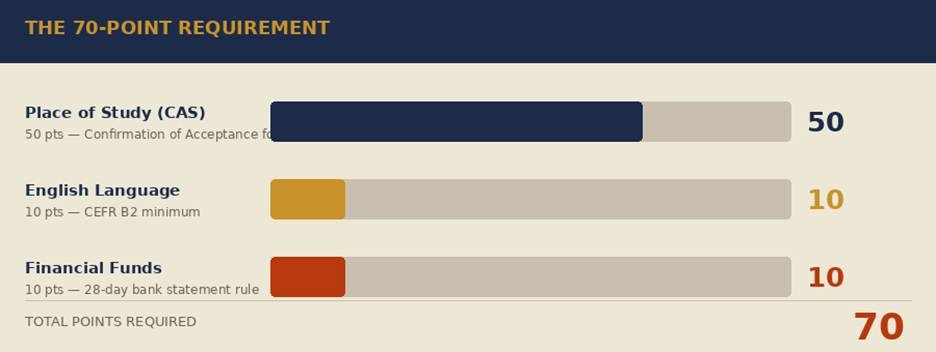
Your Confirmation of Acceptance for Studies (CAS) — the reference number your university issues to you — is the engine of your application. No CAS, no student visa. It’s worth checking your institution’s Track Record as a Highly Trusted Sponsor. If they’re under scrutiny, your application is too.
ATAS: The Check Most Students Forget
If you’re studying certain subjects, advanced physics, some areas of engineering, chemistry, you may need an Academic Technology Approval Scheme (ATAS) certificate before your CAS is issued. This isn’t optional and it isn’t fast. Apply early. Students whose countries do not appear on the exempt list (this includes most non-EU nationals studying qualifying subjects at postgraduate level) cannot proceed without it.
PRO TIP: ATAS charges no fee but takes up to 30 working days to process. If you’re studying physics, chemistry, or certain engineering disciplines at Master’s level or above, treat ATAS as Day One of your application — not an afterthought.
On language: CEFR B2 is the baseline, but many competitive courses require B2+ or C1. Don’t apply with a borderline score hoping it’ll scrape through. UKVI scrutinises this.
The “Family Ban”: Can You Still Bring a Partner?
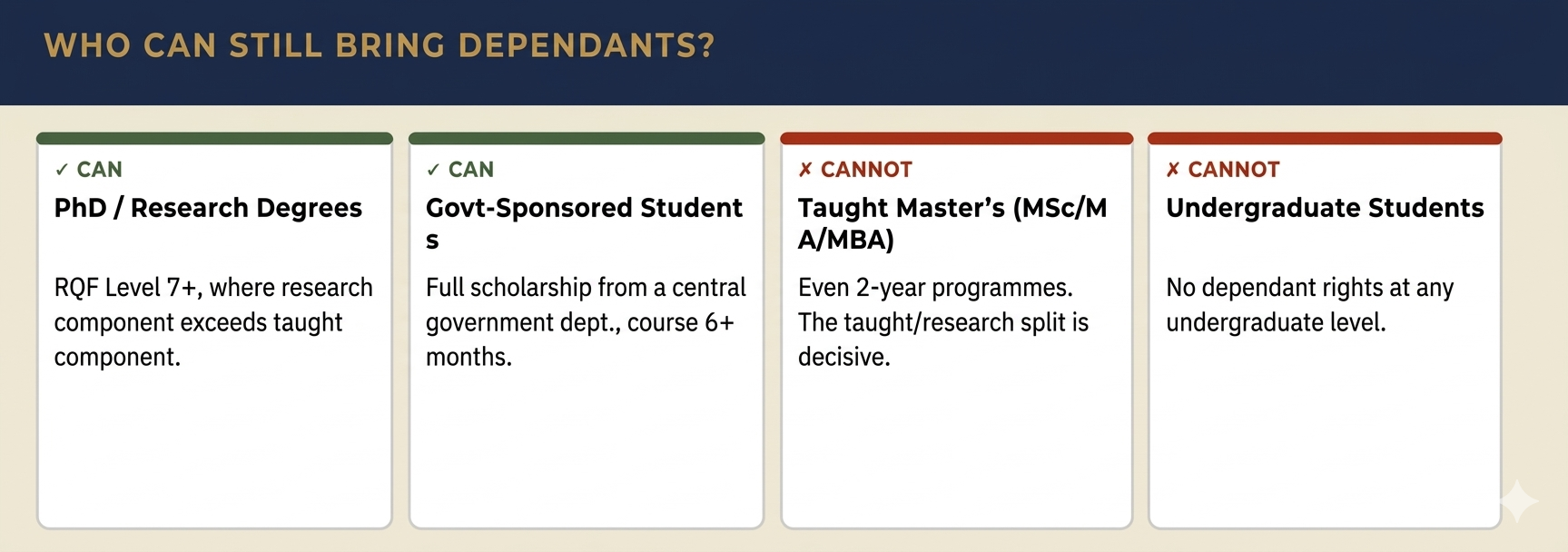
This is the question we get asked more than any other. And the answer, for most students, is no.
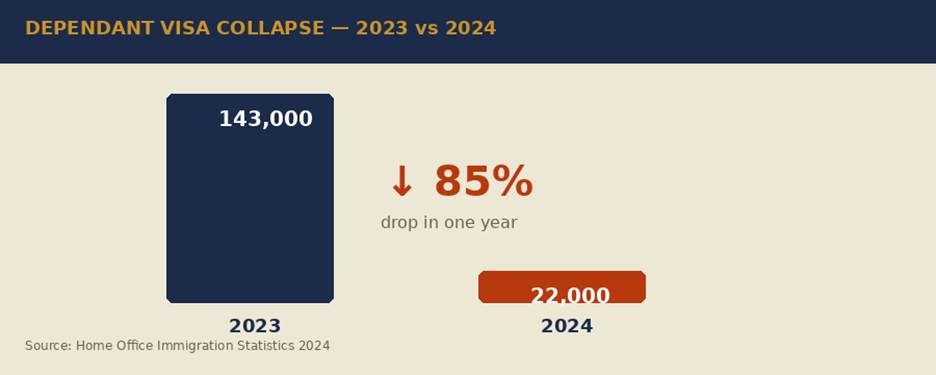
The Home Office issued 143,000 dependant visas to student family members in 2023. By 2024, that figure had fallen to 22,000 — an 85% drop in a single year. That number is a clear indicator of the policy shift.
Who counts as a dependant? The definition is limited to a husband, wife, civil or unmarried partner, or a child under 18. Parents, siblings, and extended family are not eligible to apply in this route.
Moving countries is stressful enough. Spending a year or more apart from a partner because of a visa technicality causes real hardship
The PhD/research distinction matters more than most prospective students realise. A research-integrated Master’s where the research component outweighs the taught component may qualify — but you need your university to confirm this in writing before you assume anything.
The 28-Day Rule and Maintenance Thresholds of Student Visa
Financial eligibility is where applications most commonly fail, not because people don’t have the money, but because they’re unclear on how to evidence this.
The rule is specific: you must show that you have held the required funds in your bank account (or a sponsor’s account) for a continuous 28-day period, ending no more than 31 days before you apply. Dipping below the required amount during those 28 days, even briefly, can invalidate your financial evidence. UKVI makes no exceptions.
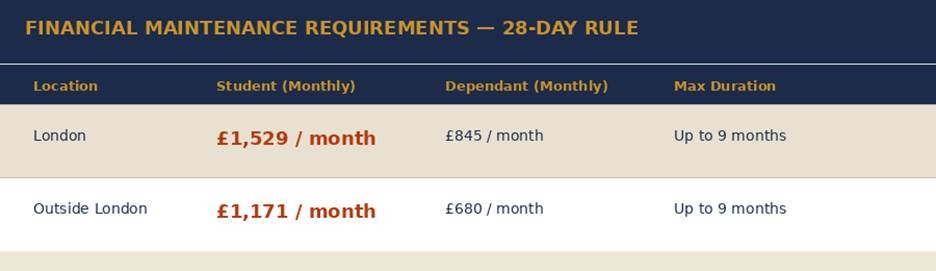
For a London-based student applying for a 9-month course, that means showing £13,761 sitting in your account continuously for 28 days before you apply. For a dependant partner joining you in London, add another £7,605. These are not annual figures — they’re the lump sum you need to demonstrate at point of application.
Many students are surprised to learn that the “London” definition is strict: it means your study site is in Greater London, not your accommodation. Some students studying at London campuses live in cheaper areas outside — the location of your institution determines which threshold applies.
Post-Study Plans: The Graduate Route Reduction
For years, the Graduate Route was one of the strongest selling points of UK education: two years (three for PhD students) to work in the UK after graduation, with no job requirement and no salary threshold. That’s changing.
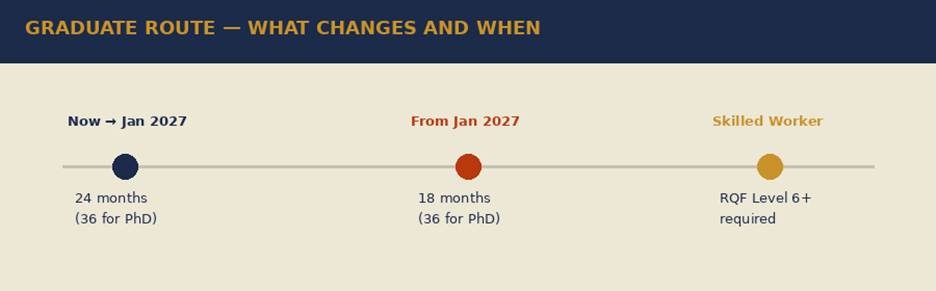
The 18-month reduction matters most for students who came to the UK specifically for the post-study work flexibility. If your plan was to graduate, find your footing, and then pursue a career — 18 months is a tight window in a competitive job market. This isn’t an argument against coming. But it does mean you need a clearer career strategy before you arrive, not after.
The Digital Shift: eVisas Are Now Standard
The Home Office no longer issues Biometric Residence Permits (BRPs). If you have been researching UK visas for some time and expected to receive a physical card, the Home Office has now moved away from that.
Your UKVI online account is now your visa. The Home Office stores your right to study, work, and access services digitally on their system. Landlords, employers, and the NHS use a Share Code you generate online to verify your status — they no longer need a physical card.
Set up your UKVI account immediately after your student visa is granted, not when you need it. If your passport changes, link your new passport to your UKVI account before travelling. Keep your email and phone number current — outdated contact details will trigger two-factor authentication and lock you out
A Realistic Outlook on Student Visa
UK universities remain world-class institutions. That hasn’t changed. But the context around studying here has shifted substantially. The “contribution-based” framing in the 2025 White Paper signals that the government wants international students who will remain economically active in the UK after graduation — not just pass through.
What does that mean for you? It means the UK is still an attractive prospect, if it aligns with your long-term plans. If you are planning a shorter stay in the UK, it may be worth considering how the reduction of the Graduate Route could affect your timeline. If you’re planning to bring a partner, check whether your degree qualifies for dependant rights before you commit. And if you’re relying on working during your studies to supplement your finances, remember that student work allowances are 20 hours per week during term time.
The students who navigate this successfully aren’t lucky— they’re more prepared. Start your eligibility check before you apply to courses, not after you receive an offer.
Need Assistance?
If you have any queries regarding UK visa or immigration applications, reach out to A Y & J Solicitors. We are a specialist immigration law firm regulated by the Solicitors Regulation Authority (SRA) and recognised in the Legal 500. Our team has supported clients through more than 5,000 immigration applications, with a 98% success rate across personal and business immigration cases.